
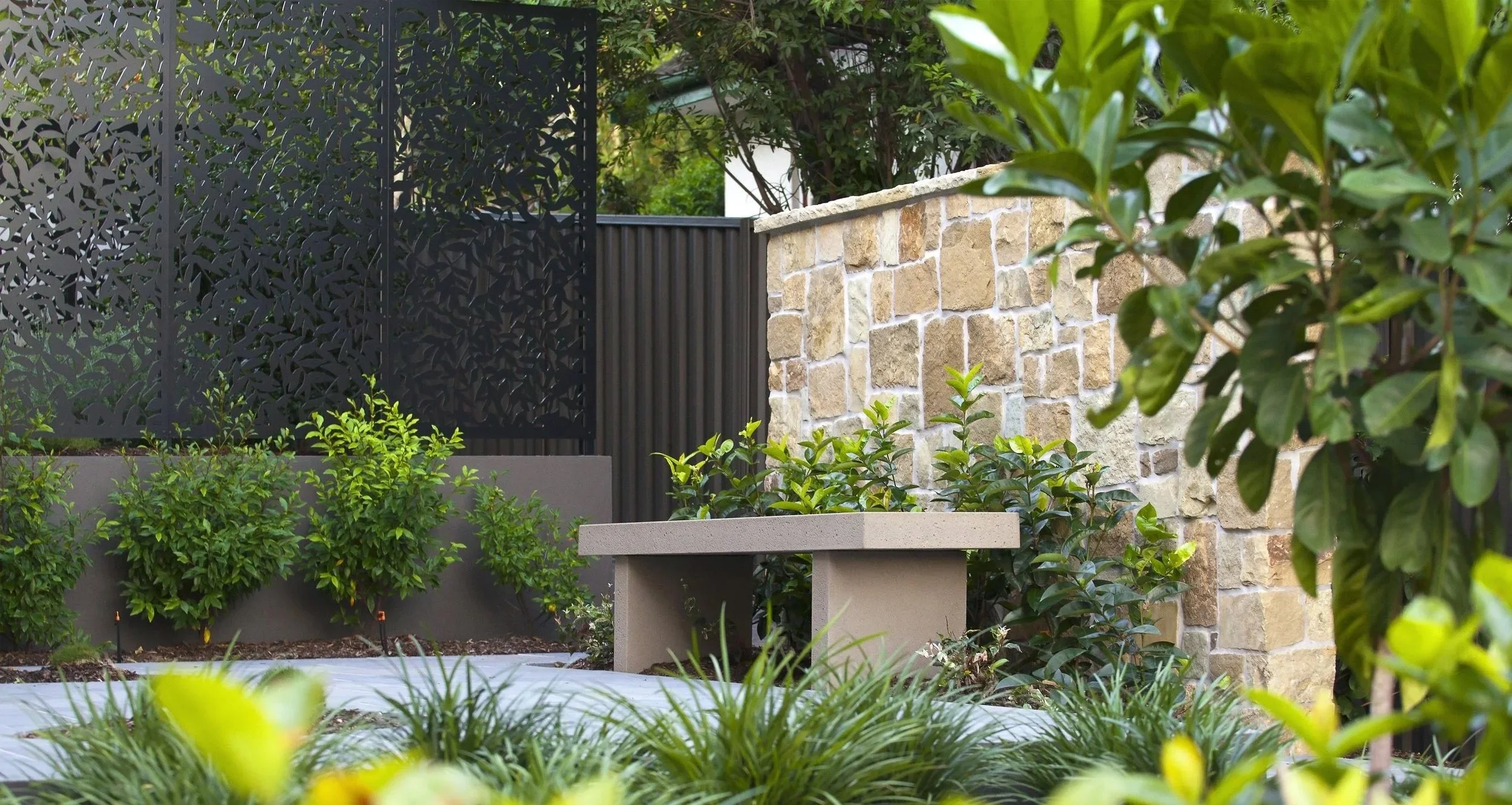
In landscape design, the most memorable spaces are intentional.
A structure that anchors the space.
A pattern of shadow across a path.
A sculptural element that gives the landscape identity.
Metal can play all of these roles. When used well, it becomes part of the architecture of the landscape, not just an object placed within it.
These are 5 principles we use when integrating metal art into landscape projects.
1. Start With Context
Every successful piece begins with the site.
Climate, surrounding architecture, planting and movement through the landscape all influence the design.
Material selection should respond to environment. Powder-coated aluminium offers durability and flexibility for intricate work. Stainless steel performs well in coastal conditions. Corten steel suits drier environments where its natural patina can develop over time.
The goal is simple: the piece should feel like it belongs.
2. Balance Built Form With Nature
Landscape design is a conversation between the built and natural environment.
Metal elements can frame planting, filter light, or provide structure for greenery.
A patterned canopy.
A screen casting shadows through planting.
A trellis softened by vines.
When designed well, laser cut / perforated screens and metal sculptures enhance the landscape rather than competing with it.
3. Use Scale Intentionally
Metal can be monumental or refined.
Large sculptural pieces can anchor public plazas or open landscapes. Smaller elements, screens, gates, seating or railings, can bring craft and detail to more intimate spaces.
Both approaches are powerful. The key is choosing the scale that supports the spatial experience.
4. Combine Art With Function
The most successful pieces do more than look good.
Laser cut and perforated screens can provide privacy and shade. Canopies define gathering spaces. Integrated lighting can reveal pattern and texture at night.
When art and function work together, design becomes part of how people use a space.
5. Reflect Local Identity
The strongest landscapes feel connected to place.
Custom metal design can reference local landscapes, culture or history.
Collaborating with local artists, including First Nations artists, can bring cultural depth and authenticity to a project.
Design becomes part of the story of the space.
Designing Landscapes That Last
When integrated thoughtfully, metal elements can shape how people move through and experience a landscape.
They create landmarks, moments and identity.
At Urban Metal, we design custom architectural metal that helps landscapes feel intentional, distinctive and memorable.
Because the best spaces don’t just function.
They connect.
